
Call us now :08045800491
 Send Inquiry
 Send Inquiry
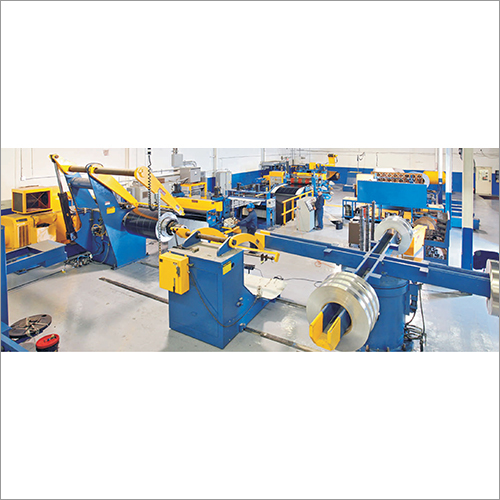
Slitting Machine
Price 375000.0 INR/ Unit
MOQ : 1 Unit
Slitting Machine Specification
- Drive Motor
- AC Servo Motor
- Product Type
- Industrial Slitter
- General Use
- For slitting rolls of sheet material such as paper, film, foil, textile and nonwovens
- Material
- Mild Steel
- Type
- Automatic Slitting Machine
- Capacity
- 15-35 meters/min (depending on material)
- Weight (kg)
- Approx. 1800 kg
- Computerized
- Yes
- Automatic
- Fully automatic
- Cutting Speed
- 120 m/min
- Cutting Thickness
- 0.02 mm - 3 mm
- Cutting Function
- Precise longitudinal slitting and rewinding
- Cooling System
- Air cooling
- Drive Type
- Electric
- Voltage
- 380V / 415V
- Dimension (L*W*H)
- 3000 mm x 1700 mm x 1700 mm
- Feature
- Heavy duty frame, quick change blade system, easy operation
- Color
- Grey & Blue
- Motor
- 7.5 HP AC motor
- Mechanical Precision
- 0.1 mm
- Software Detail
- PLC based control panel
- Cutting Method
- Rotary slitting with circular blades
- Control System
- PLC based touchscreen
- Cutting Area
- 1200 mm x 1600 mm
- Cutting Material
- Paper, Film, Foil, Textile, Nonwovens
- Lubrication
- Centralized Automatic
- Operator Interface
- HMI Touch Screen
- Min. Slitting Width
- 30 mm
- Safety Standard
- Emergency stop, overload protection
- Unwind/Rewind Type
- Air shaft
- Power Consumption
- 6 kW
- Tension Control
- Automatic tension controller
- Noise Level
- < 70 dB
- Slit Rewind Diameter
- Up to 500 mm
- Edge Guide System
- Pneumatic edge guider for precise web alignment
- BladeA Size
- 150 mm diameter (standard)
- Roll Diameter
- Up to 1000 mm
- Number of Blades
- 6 (standard, customizable)
Slitting Machine Trade Information
- Minimum Order Quantity
- 1 Unit
- Payment Terms
- Telegraphic Transfer (T/T)
- Delivery Time
- 5 Days
- Main Export Market(s)
- Asia
- Main Domestic Market
- All India
About Slitting Machine
| Capacity | 10 m/min |
| Automation Grade | Automatic |
We are Manufacturers and Suppliers of Slitting Machine from Rajkot, Gujarat. Our Motto is to provide best quality machine to our esteem customers.
Additional Information:
- Delivery Time: 5Days
Exceptional Precision and Versatility
The machine incorporates a quick-change blade system and advanced rotary slitting technology for neat, accurate results on materials from 0.02 mm to 3 mm thick. Its standard configuration includes six blades, expandable as per requirements, ensuring flexibility for diverse slitting needs.
User-Friendly and Efficient Operation
Utilizing a PLC-based touchscreen HMI and centralized automatic lubrication, the slitter is designed for simplified operation and minimal maintenance. Air-cooled for durability, it offers a low-noise working environment and quick blade adjustments, increasing throughput without compromising safety or precision.
FAQ's of Slitting Machine:
Q: How does the pneumatic edge guide system improve web alignment and end product quality?
A: The pneumatic edge guider ensures precise web alignment throughout the slitting process, which helps prevent material deviation, reduces waste, and produces uniformly wound rolls with neatly trimmed edges, enhancing overall product quality.Q: What materials can be processed with this slitting machine and what is the minimum slitting width?
A: This automatic machine is suitable for slitting and rewinding a broad spectrum of materials, including paper, film, foil, textiles, and nonwovens. It can slit materials down to a minimum width of 30 mm, making it ideal for various industrial and packaging applications.Q: When should the blades be changed, and how is this accomplished?
A: Blades should be changed when the cut quality deteriorates, typically evidenced by frayed edges or decreased cutting efficiency. The quick-change blade system allows operators to replace blades swiftly and safely, minimizing machine downtime.Q: Where is this slitting machine commonly used and who are the typical users?
A: The slitting machine is widely used in converting industries, packaging, textile manufacturing, and printing sectors. It is typically operated by trained machine operators and technicians in production facilities requiring precise roll conversions.Q: What is the process for operating the machine, and how does the HMI touchscreen assist?
A: Operators load the material onto the air shaft, set parameters via the PLC-based HMI touchscreen, and start the automated process. The touchscreen interface simplifies the adjustment of slitting widths, tension control, and monitoring overall machine status for streamlined operation.Q: How does the centralized automatic lubrication system benefit machine maintenance?
A: Centralized automatic lubrication ensures consistent oiling of critical components, reducing wear, minimizing manual intervention, and extending machine longevity. This feature helps maintain optimal performance and reliability with minimal upkeep.Q: What safety measures are incorporated, and how do they protect users?
A: The machine includes emergency stop, overload protection, and a well-enclosed heavy-duty frame. These features safeguard operators against accidental injuries and machine damage, maintaining a safer working environment.
Tell us about your requirement

Price:
Quantity
Select Unit
- 50
- 100
- 200
- 250
- 500
- 1000+
Additional detail
Mobile number
Email

More Products in Industrial Slitting Line Machine Category
Industrial Slitting Line Machine
Price 10000000 INR / Unit
Minimum Order Quantity : 1 , , Unit
Automatic : Yes
Material : Mild Steel, Other
General Use : Industrial
Warranty : 1 year

 Send Inquiry


Our Products


NH 27, Near. Bhunava Village, Behind Singhal Power Press, Taluka Gondal,Rajkot - 360311, Gujarat, India

Mr Chandresh Mandaliya
(Director)
Mobile :08045800491
 Send Inquiry
 Send SMS
 Call Me Free
Developed and Managed by Infocom Network Private Limited.
